About Us
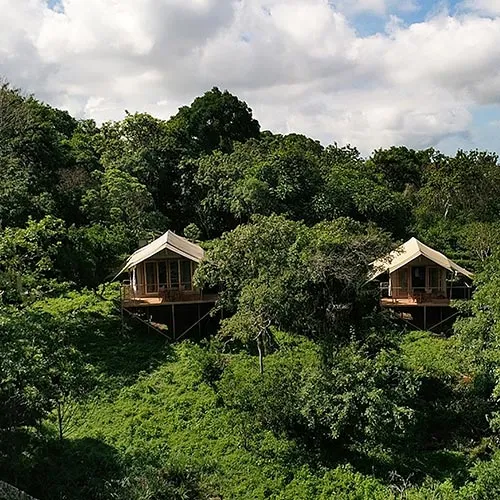
Our Safari Camp, roamed by wild giant tortoises and bordering the Galapagos National Park, is small by design and exclusive by definition. We design tailor-made safaris to meet incredible Galapagos wildlife.
Is December a good time to visit the Galapagos Islands?
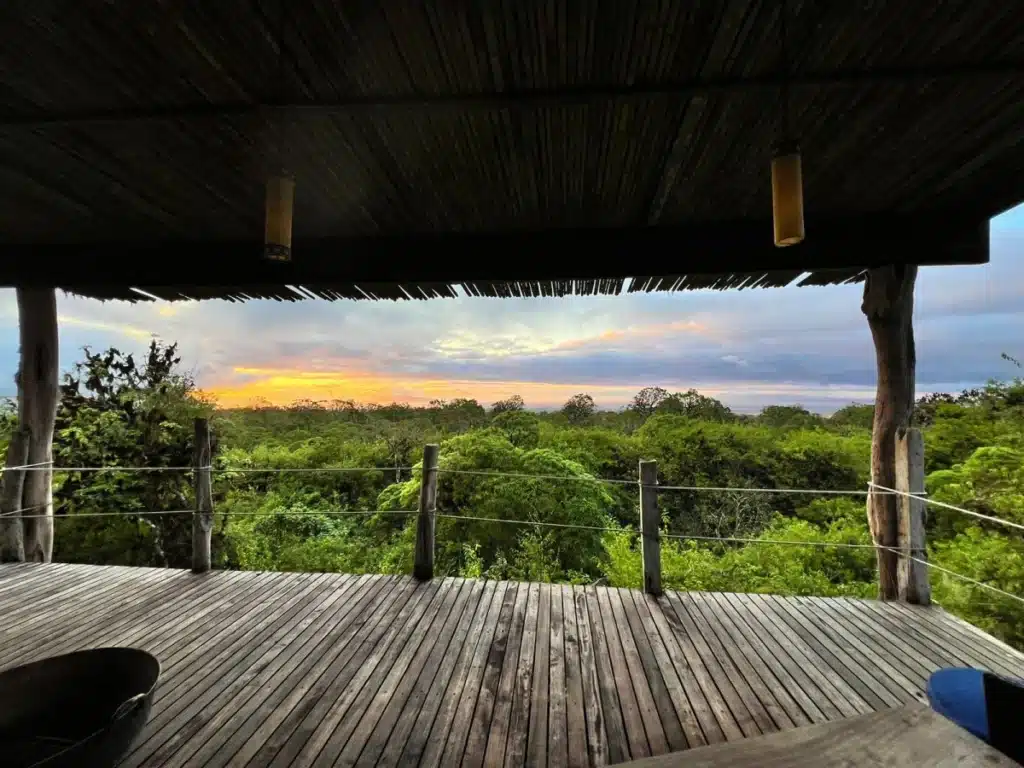
Peak Season
December is a highlight on the Galapagos calendar, ushering in the festive holiday season and attracting visitors from around the globe. The good weather and the prospect of a top wildlife experience make it a prime month for exploration. Note that early booking is essential during this peak period.
The photos featured in this article were taken in the Galapagos Islands during December.
Galapagos in December: At a glance
- Transition to the Warm & Wet Season
- Peak mating season for several species
- Air temperature: 22-31°C / 72-88°F
- Sea temperature: 22-24°C / 72-76°F
- Average rainfall: 1.5-3cm / 0.6-1.18in
- Daily sunshine: 5-6 hours
- Occasional rain showers
- Wind force: 2-5
- Underwater visibility: approx 15-25m
Galapagos Weather in December
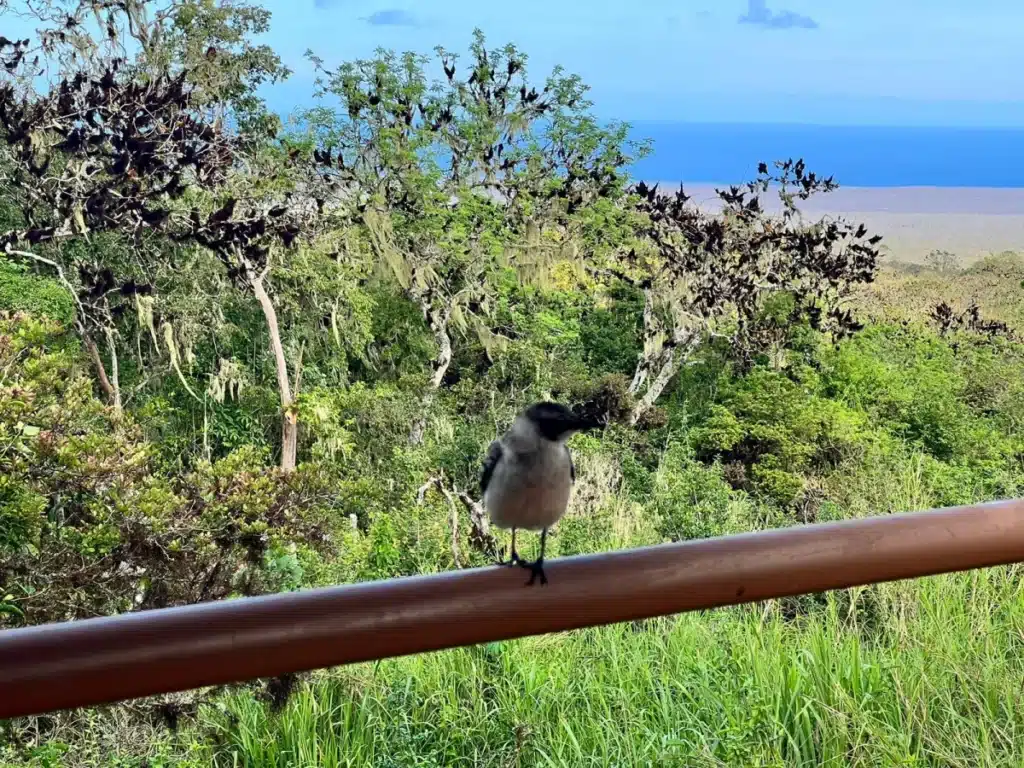
Galapagos Safari Camp
Temperatures
December and January mark the onset of the Warm & Wet season in the Galapagos, with temperatures gently rising to a balmy average of 27°C / 80°F. Water temperatures are also warming, at around 75°F (23°C).
The clearer waters and calmer seas also make boat navigations more comfortable.
Ocean Currents
The intricate interplay of oceanic currents shapes the marine ecosystem of the Galápagos Islands, and in turn, the food chain in land creatures as well. In December, the southern trade winds begin to ease, leading to the following shifts in ocean currents:
The Panama Current: Originating from the warm coasts of Central America, the Panama Current strengthens during the warm season, bringing warmer waters to the Galápagos Islands.
The Humboldt Current: This colder current from the south starts to wane in its influence as December approaches.
The Cromwell Current (aka the Pacific Equatorial Undercurrent) continues its undercurrent influence, but the overall marine environment begins warming, leading to distinct wildlife behavioural changes.
Rainfall
Rain showers in December are typically brief and sporadic, contributing to the lushness of the islands without significantly hindering outdoor activities. Most rain falls in the late afternoon or evening.
Humidity
Expect a rise in humidity levels, particularly along the coastal areas, adding to the tropical feel of the islands.
Galapagos Wildlife in December
December’s warmth and wetness usher in vibrant wildlife activity. Sea turtles begin their nesting rituals on sandy shores, and the islands are alive with bird songs, mating dances, and new births, offering a plethora of wildlife-viewing opportunities.
Species frequently spotted on our Galapagos Safaris during December include the iconic flagship species, as well as many other lesser-known creatures.
The following two images were snapped moments after leaving the airport, on the way to Galapagos Safari Camp.
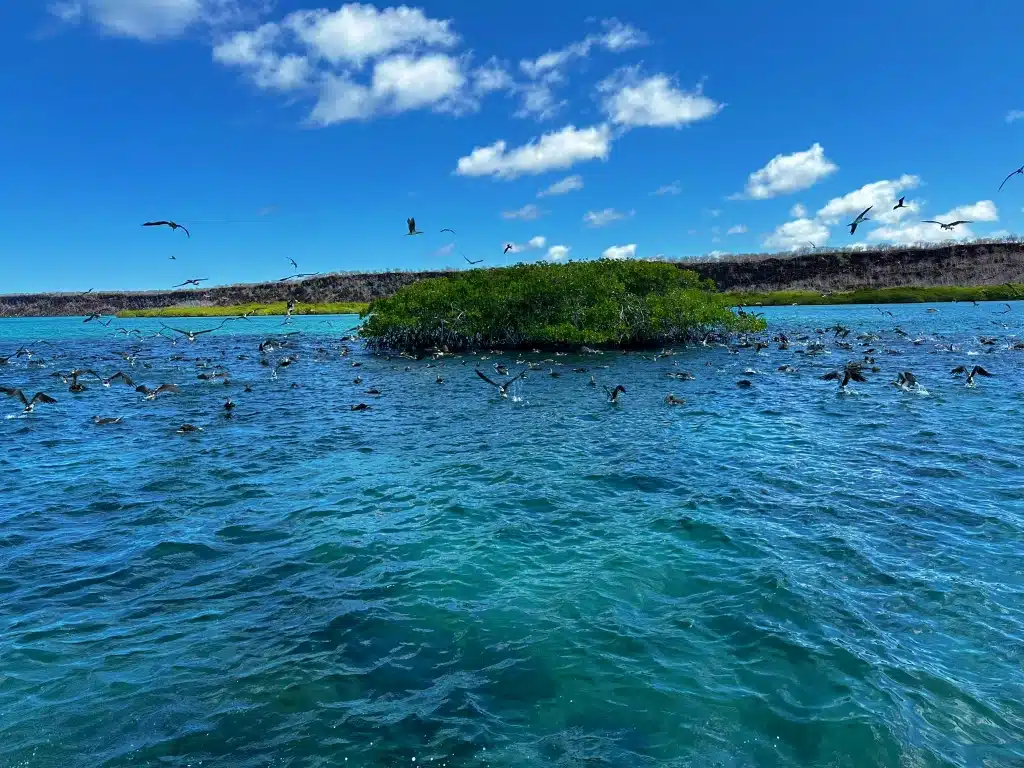
Blue-footed boobies dive bomb the waters of Itabaca Channel
Dozens of blue-footed boobies caught in a feeding frenzy in the Itabaca Channel – the narrow strip of water separating the airport island of Baltra from Santa Cruz Island.
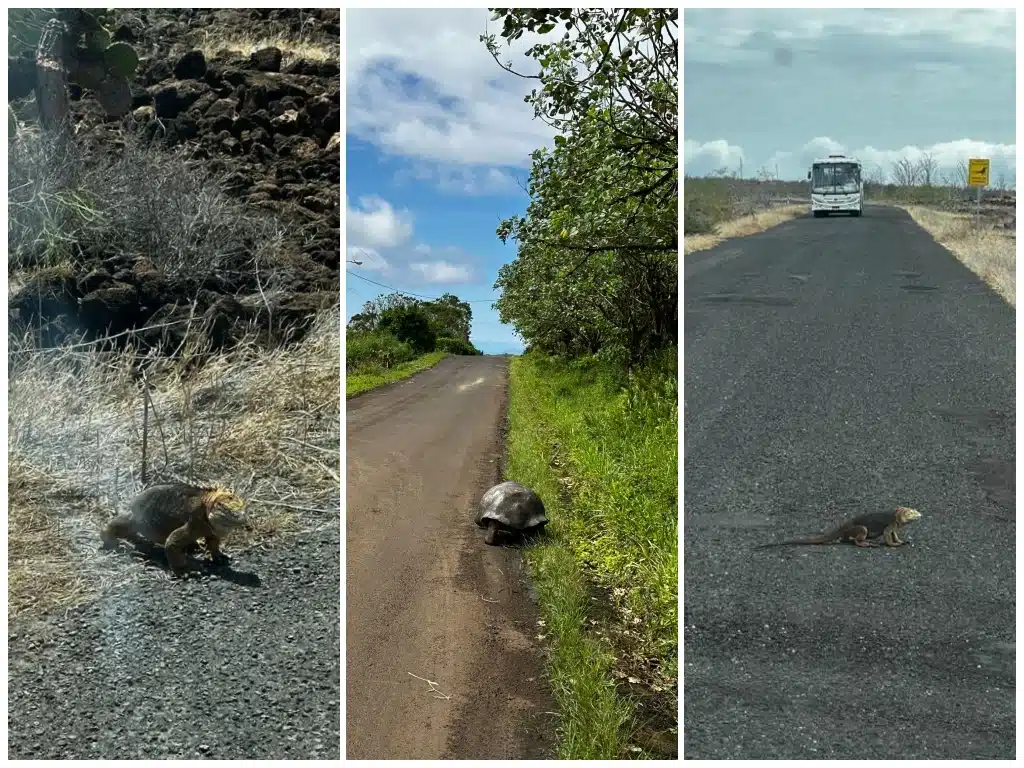
Rush hour traffic in the Galapagos
Galapagos Safari Camp in December
Wildlife seen at Galapagos Safari Camp
The vibrant ecosystem surrounding our camp in the highlands of Santa Cruz Island bursts into life with the early rains of December, welcoming a plethora of wildlife right to our doorstep.
Some of the creatures snapped from camp include those in the images below – from well hidden frogs and overhead frigatebirds to delicate insects, geckos and of course the legendary Galapagos giant tortoise – a regular at Galapagos Safari Camp.
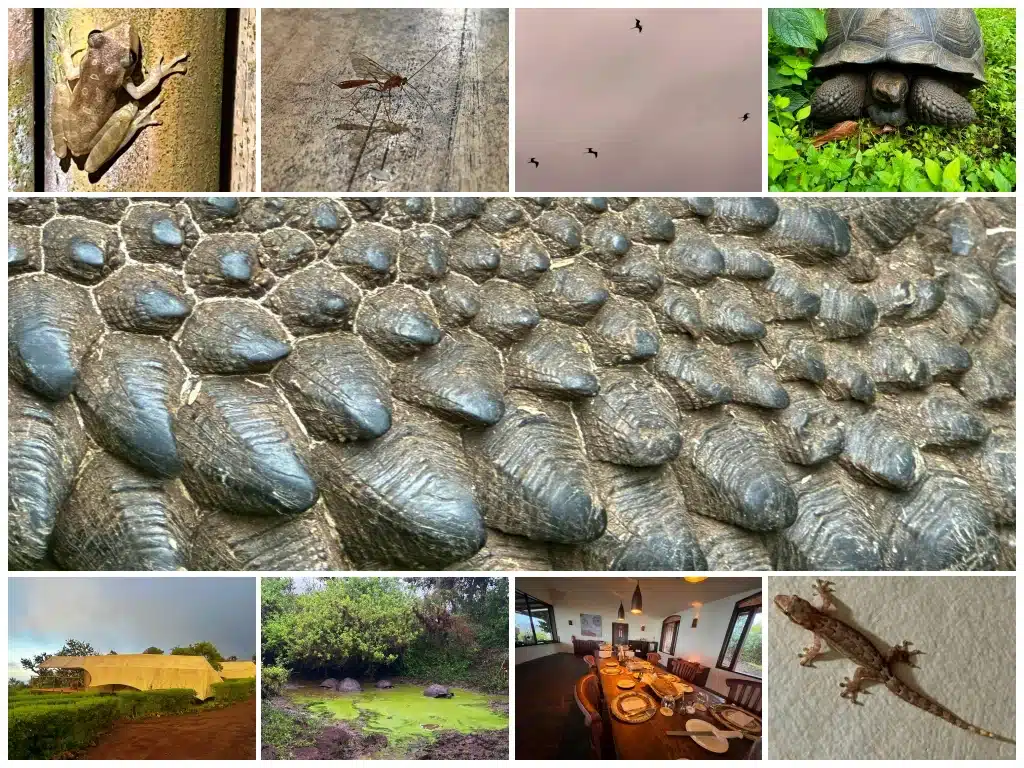
Frogs, insects, birds and giant tortoises are some of the beautiful creatures we are lucky to share our home with.
The camp is also a wonderful base for bird lovers. Galapagos mockingbirds, yellow warblers, Galapagos finches, Galapagos doves and the smooth-billed ani are to name but a few.
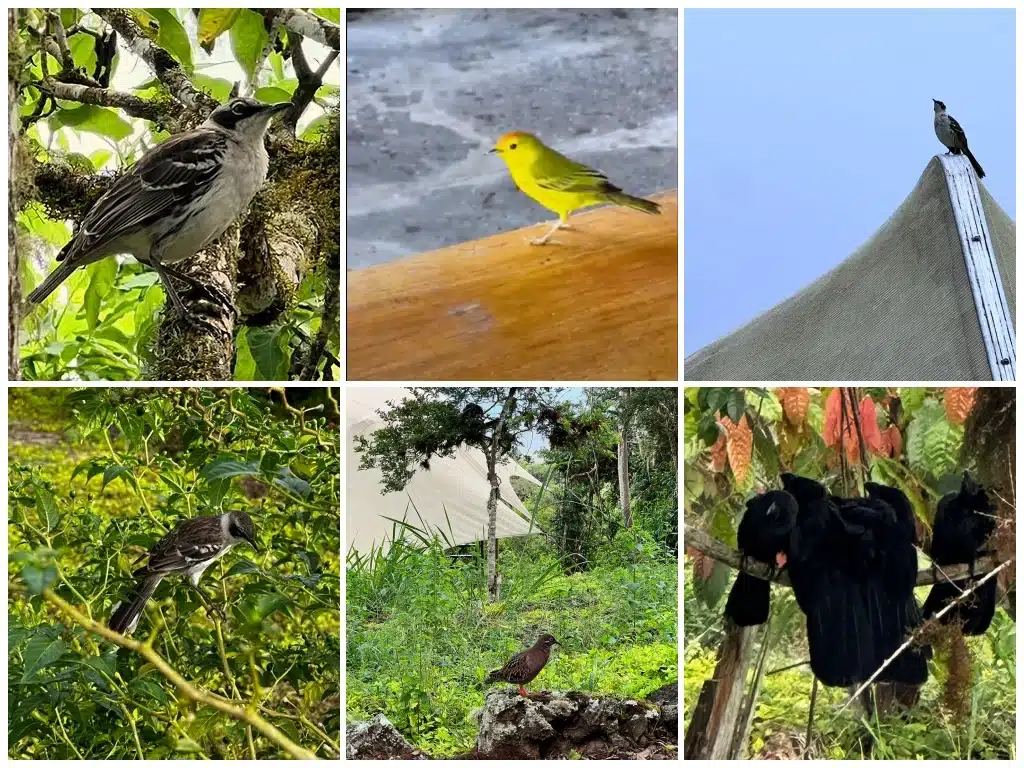
Some of the birds we see at Galapagos Safari Camp
Also known as the garrapatero (pictured bottom right corner in the image above), the smooth-billed ani is often seen in flocks of up to 40 individuals. They have five different calls: contact, alarm, gathering, threat and high-pitch alarm.
The bird was introduced by farmers in the ’70s, believing that they eat ticks off cattle (they don’t). Unfortunately they’ve become a serious threat to native plants and birds, often destroying the nests and offspring of finches, mockingbirds and the endangered vermillion flycatcher. On the plus side garrapateros are the only known species to prey on introduced wasps.
Weather at Galapagos Safari Camp
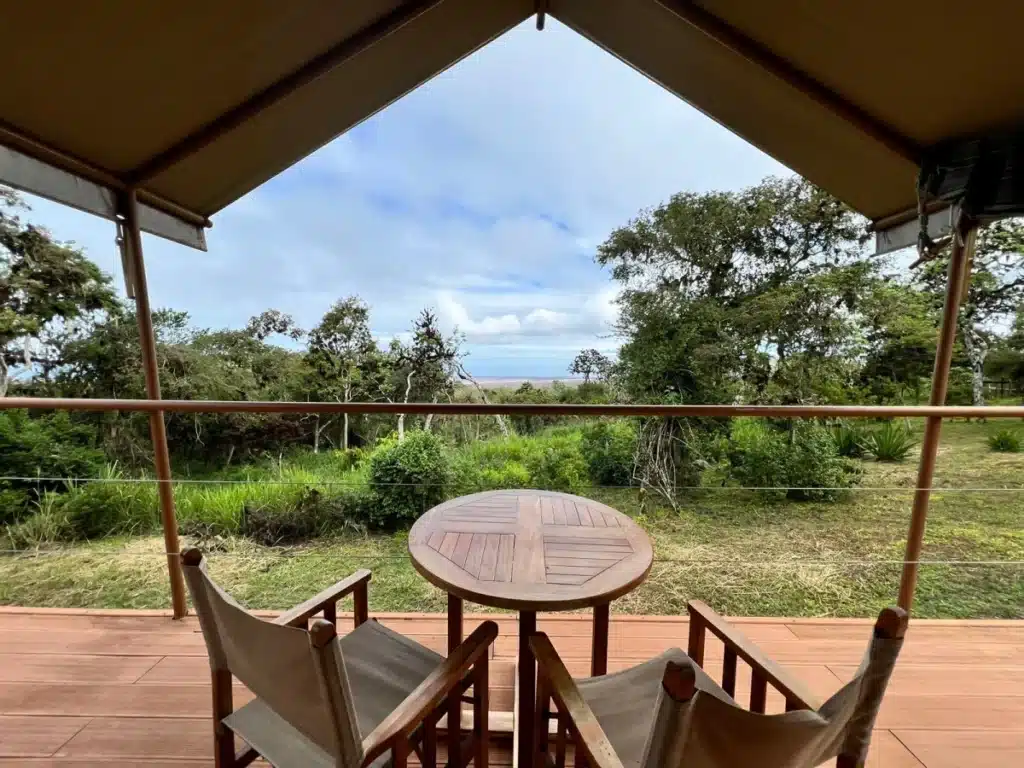
The weather in December is very pleasant in the Galapagos
The highlands experience slightly cooler temperatures than the coast, offering refreshing evenings ideal for outdoor dining and comfortable sleep without the need for air conditioning.
Sunsets are also beautiful in December, painting the sky with vibrant hues as the day ends.
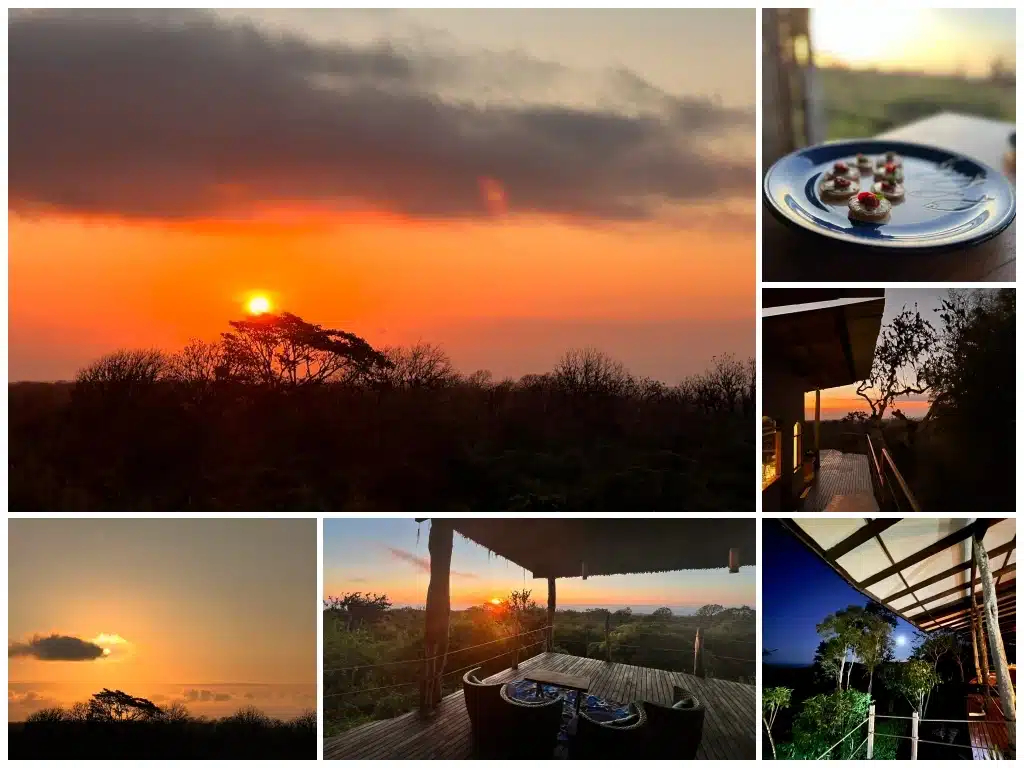
Tapas and sundowners on our Viewpoint
Culinary delights!
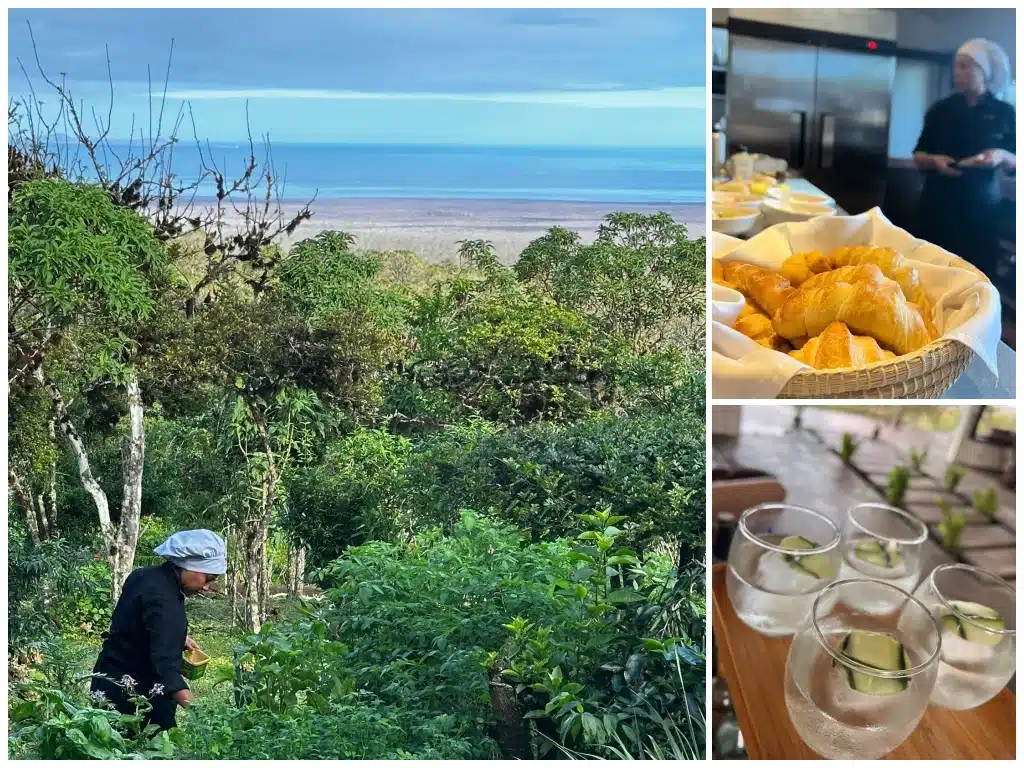
Galapagos Safari Camp in December
December is a busy month for our chefs, starting early in the morning with homemade pastries and ending with a four-course dinner for our guests to enjoy after a day of wildlife excursions.
Our menus combine sustainable island-sourced ingredients and Ecuadorian flavors, minimizing waste while catering to your preferences and restrictions.
Read more: Our sustainable approach to dining.
Summary: Galapagos in December
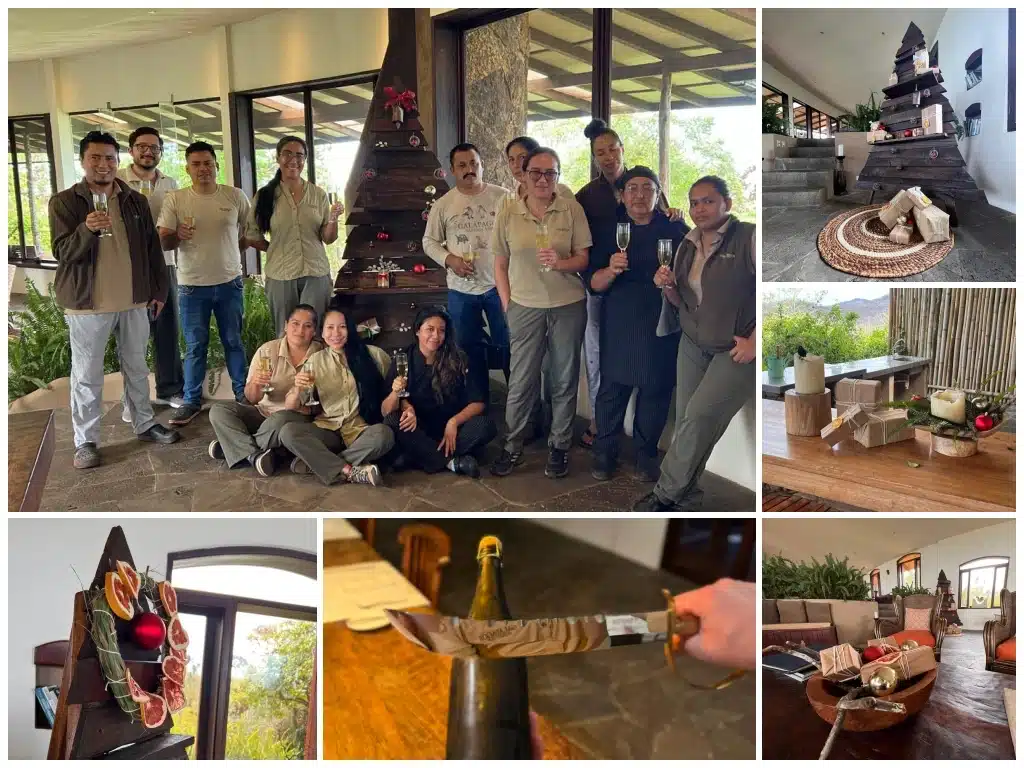
Salud from the team at Galapagos Safari Camp!
December in the Galapagos offers a festive and dynamic atmosphere, with the islands alive with wildlife activities and the weather providing a perfect backdrop for exploration.
Celebrate the holiday season with us and partake in exclusive camp events during this time.
December Reviews of Galapagos Safari Camp
The following are comments from guests who stayed at Galapagos Safari Camp in December.
Collected from feedback forms:
“The best! They are wonderful! Took care of all our covid-related issues with skill and grace. [Name of guide] is great! We enjoyed her wit and appreciated the knowledge she shared. On a scale of 1 to 10, we would give it 11!!”
“We had a terrific stay! Would highly recommend to friends and family. A dream experience. Thank you so much.”
“Increible, la calidad de comida y servicio. Felicitaciones.”
“It’s been the best honeymoon we would have dreamed. Everything was perfect and well organized.”
“All the staff at GSC were wonderful! The chefs and kitchen staff made a wide variety of high quality and delicious food. Service and attention to detail beyond our expectations. [Name of guide] friendly, warm and incredibly knowledgable. Enjoyed all activities which were thoughtfully organized by staff, and thank you for going through them daily with us”
“We just had the best holidays thanks to all of you! You took such amazing care of us, there was never ever a ‘no’ or ‘not possible’ during all our stay. We felt totally pampered 24/7. Your attention to every detail is absolutely exceptional! We also totally loved your delicious cuisine!!”
“Everything at the camp was phenomenal! The staff is incredible and the food was some of the best we’ve ever had! Truly incredible! We ❤️ Jorge and Juan!!! A very special place.”
“Thank you so much for planning such an amazing and memorable experience for my family and me. The entire experience was beyond our expectations and the people we met at the safari camp, the guides and all your partnering hosts were all so warm, knowledgable and generous.”
“Everything tip top! The best! Superb! Everything that GSC has provided has been excellent. The bar was 6/5!”
“We had an amazing time. Guide was knowledgable, friendly and professional. Snorkeling was great first two outings, channel snorkel was challenging due to visibility.”
“Totally exceeded our expectations. Thank you. Having the same guide and driver throughout was a plus to the experience. Enormously memorable time for our entire family. Thank you.”
Tripadvisor & Google Reviews
For more testimonials, see our reviews on Tripadvisor (you can filter them for ‘time of year’) and also on Google.

When to Visit the Galapagos by Month
For more information on the weather and wildlife in the Galapagos, please visit When to visit the Galapagos Islands or one of our monthly guides:
January, February, March, April, May. June, July, August, September, October, November, December.
Wildlife Observation Disclaimer
Please remember that our wildlife insights are based on the collective experiences of our team, our guests, and professional Naturalist Guides. Wildlife viewing is inherently unpredictable, and while we strive to provide an authentic and engaging experience, specific animal sightings cannot be guaranteed. Each safari is unique.