A Galapagos Photography Safari
In October and November 2026, we will be offering two small-group Photography Safaris in the Galapagos, led by one of the islands’ leading wildlife photographers, whose work has been published by National Geographic, and guided by an official Galapagos naturalist.
Why the Galapagos excels for wildlife photography

©Lucas Bustamante
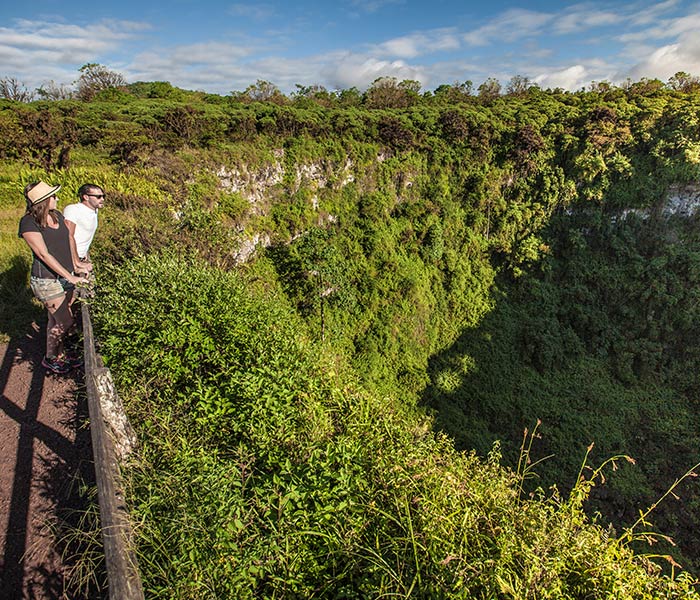
The Galapagos offers conditions unlike anywhere else in the world for wildlife and nature photography. Animals are abundant and remarkably unconcerned by human presence, allowing for close, sustained observation. The landscapes are varied, with ecosystems ranging from lush, forested highlands to arid coastlines shaped by lava and sea.
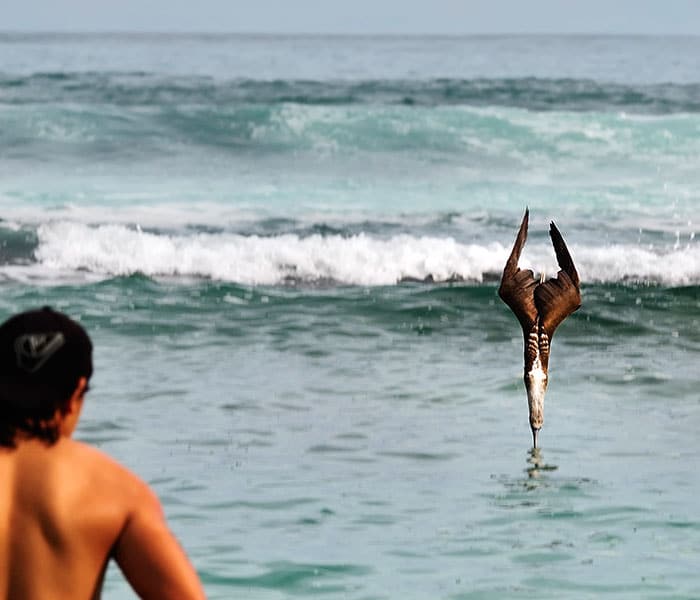
Combined with wildlife found nowhere else on Earth, the islands provide exceptional opportunities to photograph behaviour, form, and environment, both on land and underwater.
Who are these Safaris for?

©Lucas Bustamante
Our Photography Safaris are designed for nature photography enthusiasts of all levels who use photography as a way to observe and connect more deeply with the natural world, want help taking their work to the next level, and wish to experience the Galapagos Islands from the perspective of a professional wildlife photographer.
Who is Lucas Bustamante?

Your photography guide, Lucas Bustamante, is a Galapagos-based wildlife photographer, conservation biologist, and author, with nearly two decades of experience working in some of the world’s most biodiverse regions. Growing up in Ecuador and spending his career immersed in the natural world, Lucas has developed a deep understanding of wildlife behaviour, ecosystems, and visual storytelling.
His photography is closely tied to conservation and scientific research, and his work has been published by National Geographic, BBC Wildlife, Smithsonian and other leading publications. He is the author of several books, including Reptiles of Ecuador, and has contributed to the description of multiple species new to science.
As a teacher, Lucas brings a warm, friendly and patient approach, shaped by years of observing the same species across different environments, weather conditions, and life stages. His focus is on helping photographers learn how to read behaviour and make deliberate decisions, from where to stand and when to wait, to recognising the moments that result in stronger images.
Lucas is a native Spanish speaker and is fluent in English.
What will you learn?

©Lucas Bustamante
You will build your confidence as a wildlife photographer while developing a deeper understanding of Galapagos wildlife and behaviour. You will learn practical techniques you can apply long after the Safari ends, refine how you work with light and composition, and begin to identify your own photographic style. You will also learn how to photograph different Galapagos species from a professional photographer who has spent years observing and photographing them.
The aim is to help photographers move beyond postcard images and vacation snapshots, and towards creating truly exceptional photographs, images that capture an animal’s character, behaviour, and sense of place. Photographs to feel genuinely proud of, that transport you back to a moment in time, and continue to give you joy for years to come.
What will you experience?

©Lucas Bustamante
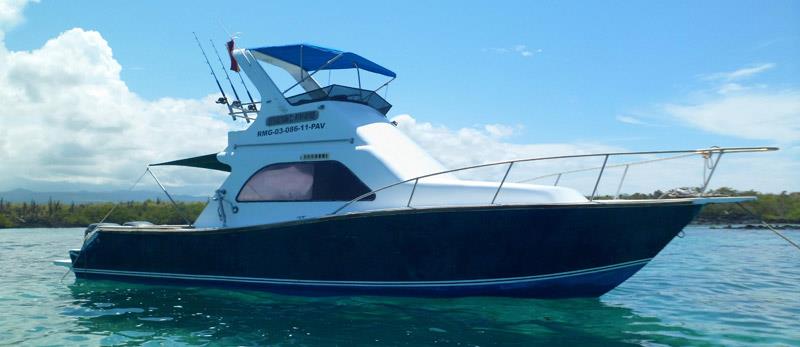
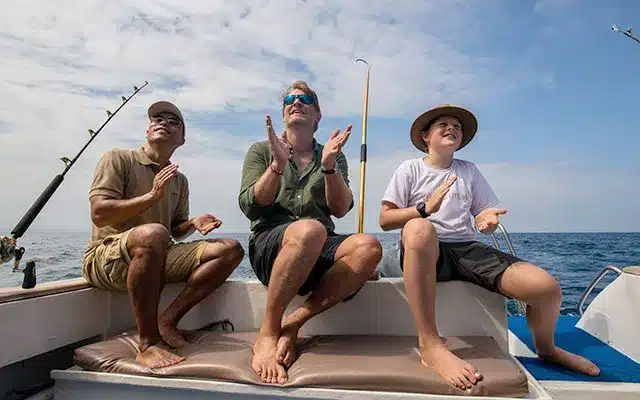
The 6 night/5 day itinerary includes a carefully chosen selection of sites across Santa Cruz Island, as well as a boat trip to an uninhabited island. Along the way, you will have opportunities to photograph the islands’ terrestrial species, many of which are endemic, as well as the archipelago’s renowned marine life while snorkeling.
Few wildlife destinations offer the chance to photograph animals both on land and underwater. The Galapagos Marine Reserve, one of the largest and most biologically diverse marine protected areas in the world, supports a remarkable variety of marine life.
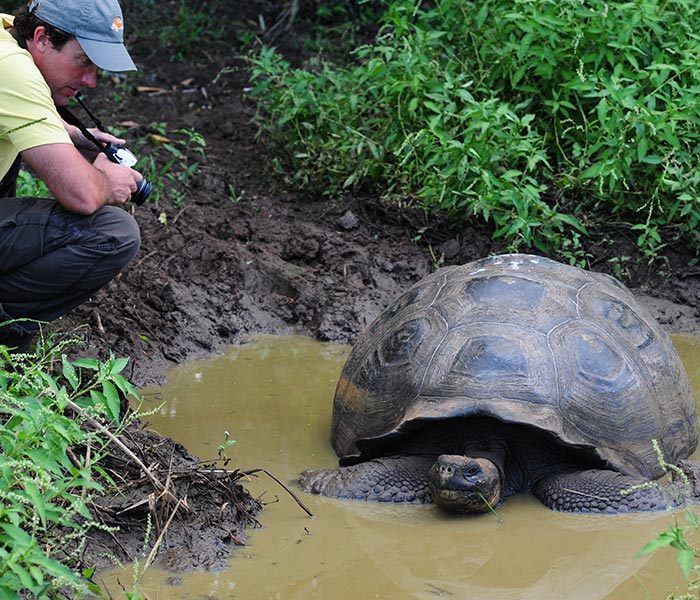
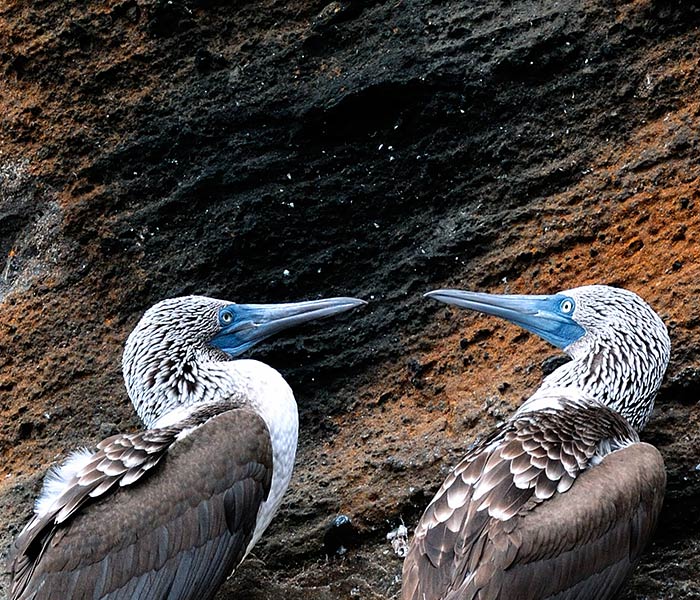
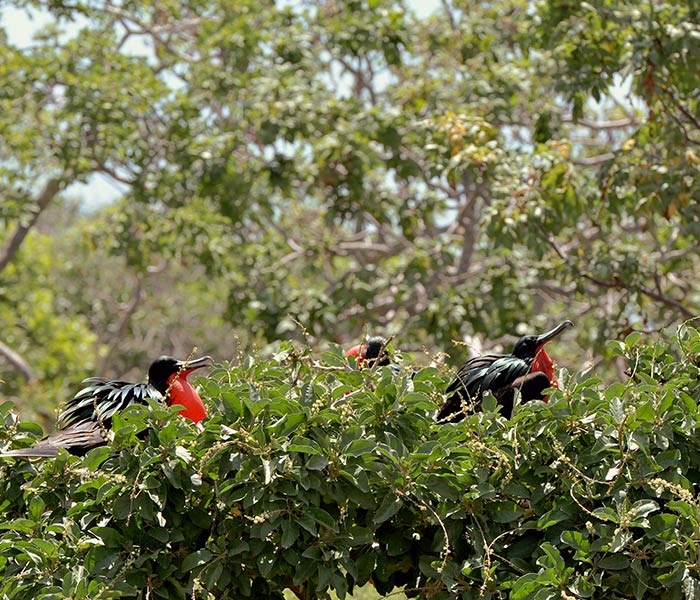
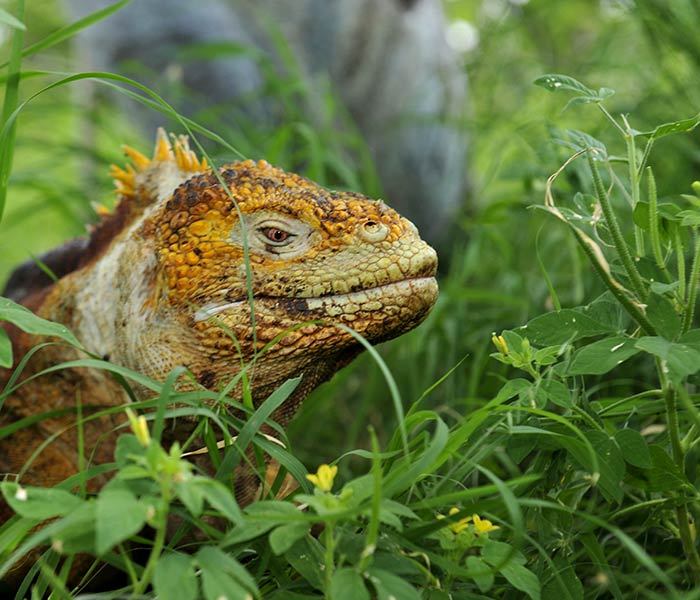
While specific sightings can never be formally guaranteed (as in any wildlife experience), species typically encountered on our Safaris include giant tortoises, marine iguanas, land iguanas, sea lions, blue-footed boobies, frigatebirds, sea turtles, Darwin’s finches, Galapagos mockingbirds, Sally Lightfoot crabs, as well as many lesser-known, yet equally remarkable creatures.
Read more:
Wildlife Seen on our Safaris
Pace and flexibility

©Lucas Bustamante
As with all Galapagos tours, time spent on uninhabited islands is allocated by the National Park in advance and must be adhered to.
However, time spent at sites on Santa Cruz Island is more flexible, allowing photographers greater freedom to linger, observe, and work a scene when conditions are right.
While this is a shared group experience and timings are guided by Lucas and the naturalist, this land-based approach offers far more scope to adapt pace than is possible on strictly scheduled group tours.
Your home in the Galapagos

Evenings are spent back at Galapagos Safari Camp, where the group gathers for relaxed photography workshops. These sessions provide time to review the day’s images, discuss approach and technique, and learn simple edits that help elevate each individual’s work.
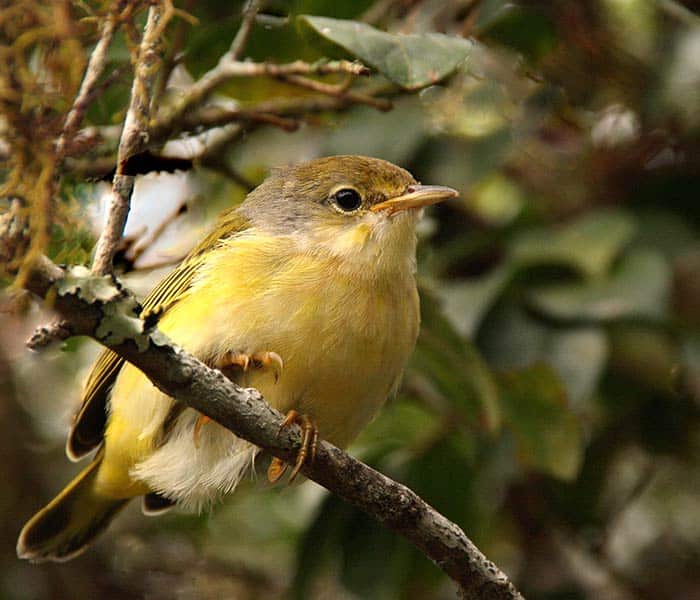
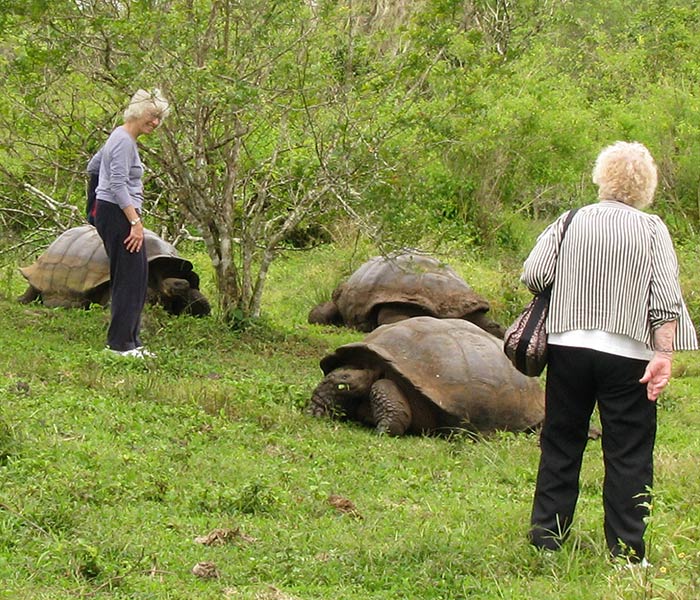
Set on the edge of the National Park with no fences, the Camp is also home to many iconic species. Giant tortoises frequently pass through the grounds, and a wide variety of birdlife inhabit the surrounding vegetation, including finches, mockingbirds, warblers and owls.
Elevated above the surrounding landscape, the Camp also offers wide views across the National Park and out to the Pacific Ocean, with changing light and sunsets that provide opportunities to work with atmosphere, colour, and scale.

©Lucas Bustamante
Sleeping on land also allows guests to explore the Camp’s 55 hectares of private land at their own pace, to experiment with night photography, whether it’s capturing the nocturnal wildlife or the star-filled skies of the Galapagos highlands.
Read more:
Wildlife and Nature at Galapagos Safari Camp
Astrophotography in the Galapagos Islands
What is the weather and wildlife like in October and November?

October and November fall within the Galapagos’ cooler, drier season, shaped by nutrient-rich ocean currents that bring an abundance of marine life to the islands. Air temperatures remain mild, with cooler seas that are highly productive, making this an excellent time for snorkeling and underwater photography, with large schools of fish, seabirds, rays, sharks, and occasional whales moving through the marine reserve.
On land, mist (la garúa) often settles over the highlands, softening the light and creating atmospheric, luminous landscapes, while the lowlands remain dry and stark. With lower humidity and sharper air quality, views can be exceptionally clear when the clouds lift, lending the islands a moody quality. Co-founder Stephanie Bonham-Carter describes these months as “hauntingly beautiful and reminiscent of the Romantic paintings of Turner and Whistler, evocative of a bygone era.”
Combined with a quieter period in the tourism calendar and highly active marine life, this is a particularly rewarding period for photographers drawn to mood, light, and underwater encounters.
Read more
When to Visit the Galapagos Islands
The Galapagos in October
The Galapagos in November
> back to tabs