About Us
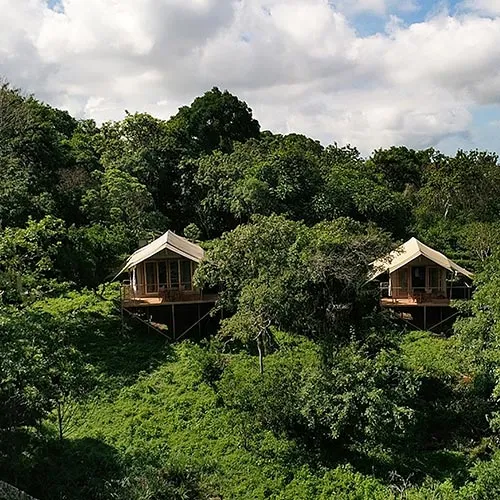
Our Safari Camp, roamed by wild giant tortoises and bordering the Galapagos National Park, is small by design and exclusive by definition. We design tailor-made safaris to meet incredible Galapagos wildlife.
South Plaza: At a glance
- Uninhabited by humans
- 0.13 squared km / 0.05 squared miles
- Sat just off the eastern coast of Santa Cruz
- Boat trip from Santa Cruz (where Galapagos Safari Camp is based): 1 hour, each way.
South Plaza Safari highlights
- Animals to look out for: sea lions, land iguanas, marine iguanas and the elusive hybrid iguana. Also swallow-tailed gulls, red-billed tropicbirds.
- Sesuvium – a Galapagos weed
- A ‘wailing wall’
Why should you include South Plaza on your Galapagos Safari Tour?
South Plaza – a 32-acre plot of land in the middle of open water— is full of life, colour and extraordinary creatures, including one reptile that hasn’t been found anywhere else in the Galapagos – the hybrid iguana.
1. The hybrid iguana
There are land iguanas and there are marine iguanas. And the distinction is not only a physical one… it goes to the very core of why one species has decided to embrace water and another to stay as far as possible from it. But on this isolated Galapagos rock, there is just nowhere to go for either iguana to do as he may without the other being on its tail.
That has given way to the unique hybrid iguana, the result of breeding between species. These sterile, grey-toned hybrids are not a separate species in itself, but a testimony to how complex the Galapagos natural world can be. The first hybrid to be spotted was in 1977, and still today they remain extremely elusive and difficult to find.
2. Sesuvium
Out of all the animals, the beautiful bay, the large Opuntia cacti, the spectacular Red-billed tropicbirds, which fly so elegantly waving their long streamer-like tails against the wind… It is the low-growing Sesuvium that steals the safari show on South Plaza. Technically, it is a species of weed! A spectacularly resilient weed that has adapted in a remarkable way to survive on this tiny and remote island.
Sesuvium basically loses as much chlorophyll as possible (to near life-threatening levels) as it takes the drought by its horns… Turning from green (during the wetter seasons) to orange, red and finally purple, as the dry season sets in and ravishes floral communities elsewhere, here, South Plaza remains carpeted with colourful vegetation all year round.
Most call it by its Latin name, Sesuvium, but it is fittingly known as “Galapagos carpetweed” in English.
3. A wailing wall
As you make your way to the end of the island, which is essentially a ramp that takes you up 23 meters above sea level, you reach what feels like the edge of the world, filled with breaking waves and the desperate-sounding calls of hundreds of sea birds that soar over the rocks they nest in.
Here, the largest animals are bachelor sea lions, which spend day in and day out climbing the slippery cliff getting pumped and fit to take on the strongest sea lions of the islands.
4. A snorkeling trip
The visit to South Plaza is also accompanied by an excellent snorkeling experience.
Galapagos Islands to Visit
To learn more about the other islands we visit, see our guides below:
Plan your Galapagos Vacation
See our Safari Holidays for our suggested Galapagos itineraries and recommended activities